
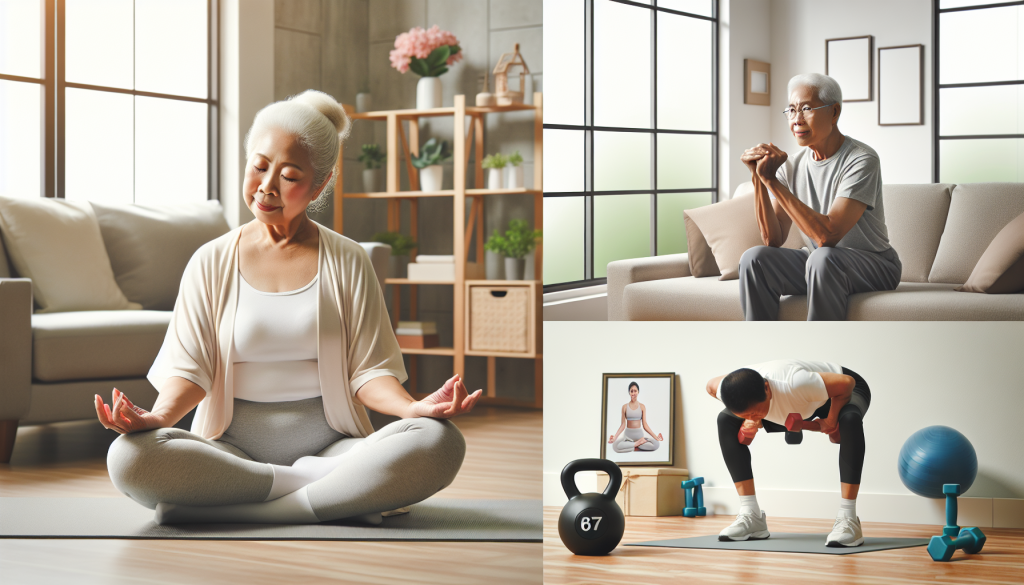

15 Minute Senior exercises You Can Do at Home
Staying active is one of the best things you can do for your health as you age. Even a short daily workout can improve balance, strengthen muscles, support bone health, boost mood, and help with mobility for everyday tasks. If you’re looking for something that fits into a busy day and doesn’t require a gym or fancy equipment, this 15-minute plan is for you. It’s designed to be safe, gentle on joints, and adjustable to your own pace and needs. As with any new Exercise program, check with your doctor if you have medical conditions, chronic pain, or if you’re recovering from an injury.
Why a short, consistent workout helps
- Consistency beats intensity: Short, daily sessions are easier to fit into a routine, which makes it more likely you’ll stick with it.
- Builds functional strength: Targeting legs, core, arms, and back helps with everyday tasks like standing up, climbing stairs, and carrying groceries.
- Improves balance and confidence: Gentle balance work can reduce the risk of falls and boost confidence in daily activities.
- Safe for most seniors: The plan uses mostly bodyweight and a few common household items, and can be done with a chair nearby for support.
What you’ll need
- A sturdy chair with a backrest (for seated work and balance support)
- A small set of light dumbbells or household items (like water bottles) for resistance, if you have them
- A resistance band or a towel (for rows, if you have a band; otherwise towel rowing works too)
- An open, non-slip space free of clutter
Safety notes
- Move at your own pace. If something feels painful (not just uncomfortable), stop and rest.
- Breathe consistently. Exhale during effort, inhale during ease.
- Use support as needed. Hold onto a chair, railing, or countertop if balance is not steady.
- Start slow, then progress gradually (increase speed, reps, or range of motion only when you’re comfortable).
The 15-minute plan: structure and routine
- Total time: about 15 minutes
- Warm-up: 2 minutes
- Main workout: 10.5 minutes (3 rounds of 3 exercises, about 3.5 minutes per round)
- Cool-down: 2.5 minutes
Warm-up (about 2 minutes)
- 60 seconds: Gentle marching in place
- 30 seconds: Shoulder rolls (both directions)
- 30 seconds: Ankle circles (10–15 circles each direction, per ankle)
- Optional: Deep breathing and side-to-side torso twists for another 30 seconds
Main workout (about 10.5 minutes)
The main portion is organized into three rounds. Each round contains three exercises, each performed for about 60 seconds, with a short 15-second transition between moves. If you need more rest, take it. If you’re ready, you can keep moving to keep the pace up.
Round 1: Foundation and posture
1) Sit-to-Stand from a chair (60 seconds)
- How to do it: Sit tall in a chair with feet flat and hip-width apart. Lean slightly forward, press through your heels, and stand up fully. Sit back down slowly, maintaining control, and repeat.
- Tips: Use your arms to assist if needed, and avoid rushing. Keep your back straight and knees aligned over your toes.
- Why it helps: This Exercise builds leg strength and mobility for everyday tasks like getting in and out of chairs.
2) Wall Push-Ups (60 seconds)
- How to do it: Stand a few feet from a wall, hands on the wall shoulder-width apart. Keep your body straight, bend your elbows to bring your chest toward the wall, then push back to the starting position.
- Modifications: If a wall push-up is too challenging, do them on a countertop or with hands on a sturdy chair.
- Benefits: Builds upper-body strength, which supports daily activities and reduces fatigue in arms and chest.
3) Seated Band Row or Towel Row (60 seconds)
- How to do it: If you have a resistance band, anchor it under your chair or around a stable post, hold the ends, and pull toward your torso while squeezing the shoulder blades together. If you don’t have a band, loop a towel through your hands and mimic a row by pulling toward your chest.
- Tips: Keep your back straight and avoid shrugging your shoulders. Aim for a smooth, controlled movement.
- Why it helps: Strengthens the back and shoulder muscles, improving posture and reducing strain from daily tasks.
Round 2: Balance and lower body
4) Standing Hip Abduction (side leg lift) with chair support (60 seconds)
- How to do it: Stand tall, holding onto the back of the chair for balance. Slide one leg away from your body to the side and back slowly. Repeat on the other side after 30 seconds if you can.
- Modifications: If balance is a concern, bend the knee slightly and keep the foot lower or do the movement seated by lifting the leg to the side while seated.
- Benefits: Strengthens hip abductors, which support knee stability and balance.
5) Calf Raises (60 seconds)
- How to do it: Stand with feet hip-width apart, rise up onto the balls of your feet, then lower slowly. Hold the railing or chair as needed for balance.
- Modifications: Do this one leg at a time if both feet are too challenging, or perform seated calf raises with feet on the ground and a light resistance on your toes.
- Benefits: Builds ankle and calf strength important for stairs and walking stability.
6) Bicep Curls with Light Weights (60 seconds)
- How to do it: With light dumbbells or water bottles, palms facing forward, bend elbows to bring weights toward your shoulders, then slowly lower.
- Modifications: If you don’t have weights, do the movement with hands empty and focus on the range of motion, or use a towel to provide light resistance.
- Benefits: Maintains arm strength for daily tasks like carrying groceries or opening jars.
Round 3: Core, mobility, and gentle cardio
7) Seated Torso Twist (60 seconds)
- How to do it: Sit tall in the chair, feet flat. Place hands on your abdomen or hold a light object at chest height. Slowly rotate your torso to the left, then to the right, keeping hips facing forward.
- Modifications: For less rotation, keep movements small and controlled. You can do this one side at a time if that’s more comfortable.
- Benefits: Encourages spinal mobility and core engagement without strain.
8) Marching with Arm Movements (60 seconds)
- How to do it: Stand or sit and march in place while adding gentle arm movements—circles, punches, or overhead reaches.
- Modifications: If standing is too intense, stay seated and perform the arm movements with a light range of motion.
- Benefits: Keeps heart rate up safely and supports shoulder mobility and coordination.
9) Balance Challenge: Single-Loot Stand with Support (60 seconds)
- How to do it: Stand with one foot on the ground and the other foot slightly lifted, and then switch sides. Use the chair or a wall for balance as needed.
- Variations: If a full single-leg stand is too difficult, alternate between feet every 10–15 seconds or perform the movement with both feet on the ground while you try to lift one heel at a time.
- Benefits: Improves balance and proprioception, reducing fall risk.
Cool-down (about 2.5 minutes)
- Gentle stretching for the legs, back, shoulders, and chest. Hold each stretch for 15–30 seconds, breathing deeply.
- Calf stretch against a wall or step
- Quadriceps stretch (standing or seated)
- Shoulder and chest stretch (gentle doorway stretch)
- Neck stretches (each direction, very gentle)
- Deep breathing: Inhale through the nose for a count of four, exhale through the mouth for a count of six, repeat several cycles
Modifications and tips for success
- If you’re new to Exercise or have limited mobility, start with fewer rounds or shorter durations. You can always add a round or extend a 60-second interval as you gain strength.
- Use a sturdy chair for safety and balance. If you don’t have one with a back, place the chair against a wall for extra support.
- Keep movements smooth and controlled. Avoid jerky motions and overextending joints.
- Hydrate before and after. Have a sip of water during your transitions if needed.
- If you experience pain beyond a typical muscle burn or joint soreness, stop and reassess. Consult a healthcare professional if pain persists.
Progression and keeping it engaging
- Once the routine feels comfortable, you can progress in small ways:
- Increase intensity by slightly quicker movements or by using light dumbbells (1–3 pounds) for upper-body exercises.
- Hold certain positions longer for added isometric work (for example, hold the chair sit-to-stand position for a second at the top).
- Add a fourth Exercise to Round 2, such as a gentle overhead press or a light resistance row, depending on your comfort level.
- Increase the duration of the main rounds to 3.5–4 minutes each if you want more challenge and you’re feeling up to it.
- Keep variety by swapping in different moves that target the same muscle groups. For example, replace a row with a towel-row if you don’t have a band.
Practical tips to make this a habit
- Schedule your 15 minutes at the same time each day to build routine.
- Choose a space with good lighting and a clear floor. Remove rugs that might slip.
- Keep a water bottle nearby and wear comfortable clothing and shoes.
- Track your progress in a simple journal: note how you felt before and after, and any improvements in balance or strength.
- Enlist a friend or family member to join you, even if remotely. Motivating accountability can help you stay consistent.
Real-world benefits you may notice
- Improved ease with standing up from a chair and getting in and out of bed.
- Better balance, reducing the risk of stumbles and falls.
- Greater control of everyday tasks like cleaning, gardening, or shopping.
- A sense of accomplishment and mood lift from taking positive steps for your health.
A few words on safety and individualized care
Every person’s body is different, especially as we age. What feels comfortable for one person may feel challenging for another. If you have osteoporosis, joint replacements, heart disease, or other chronic conditions, it’s important to tailor any activity to your needs. Start with the gentlest version of each movement and consult a healthcare professional about specific limitations or risks. If a movement causes pain, stop doing it and discuss alternatives with your clinician or a physical therapist.
Putting it all together
This 15-minute plan is designed to be simple, effective, and accessible from the comfort of home. It targets all the major areas that matter for daily function: leg strength for rising and stairs, back and chest for posture, arms for daily tasks, and balance for stability. The routine is modular and adjustable, so you can customize it to your current fitness level and to your living space.
A sample week to get started
- Monday, Wednesday, Friday: the full 15-minute routine as described
- Tuesday, Thursday: a lighter 10-minute version with fewer rounds or extended rest
- Saturday: a gentle activity like a 15-minute walk or a slow, relaxed stretch routine
- Sunday: rest or a brief flexibility session to keep joints mobile
Closing thoughts
A 15-minute daily commitment can make a meaningful difference in overall health and independence. By focusing on gentle strength, safe balance work, and light cardio, you’ll support your ability to perform everyday tasks, stay active with family and friends, and maintain your quality of life. Remember to listen to your body, progress gradually, and enjoy the sense of accomplishment that comes with each completed session. If you’d like, I can tailor this plan to your specific needs—such as reducing or increasing intensity, substituting exercises, or creating a printable day-by-day schedule.