
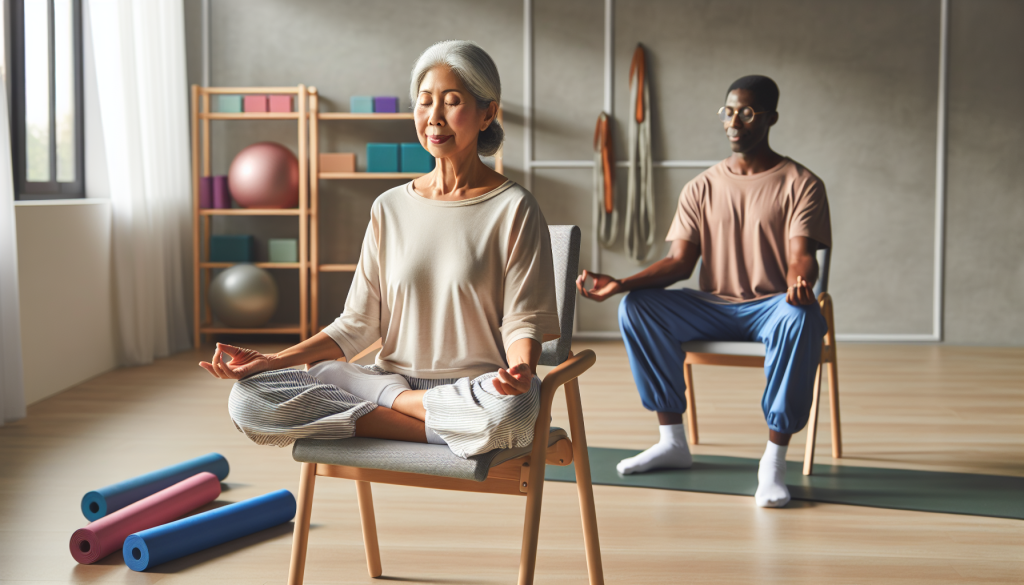
Senior health: gentle chair yoga routines for beginners with limited mobility
If you’re new to Exercise or living with limited mobility, the idea of a yoga class might feel intimidating. Chair yoga brings the benefits of mindful movement into a safe, accessible format. It uses a sturdy chair as a stable base, allowing you to improve flexibility, balance, circulation, and breathing without needing to stand or strain joints. For many seniors, chair yoga offers a practical path to daily vitality, reduced stiffness, and better mood.
This article explains how chair yoga works for beginners with limited mobility, shares safety tips, and provides step-by-step routines you can try at home. Whether you’re managing arthritis, recovering from injury, dealing with back pain, or simply want a gentle way to move, these routines are designed to honor your body and your limits while inviting gradual gains.
Why chair yoga can help seniors with limited mobility
– Accessibility: You stay seated, so you don’t have to balance on one leg or stand for long periods.
– Gentle, progressive stretches: Movements are slow, controlled, and adjustable. You can increase range of motion gradually as comfort allows.
– Low impact, low risk: The chair provides stability, reducing fall risk and joint compression.
– Breathing and stress relief: Deep, mindful breathing supports circulation, lowers stress hormones, and can improve sleep.
– Functional benefits: Improved spine mobility, shoulder flexibility, neck ease, and hip openness can translate into easier daily tasks like reaching, bending, and looking over your shoulder while driving or walking.
Safety first: getting started wisely
– Check with your healthcare provider: If you have a heart condition, high blood pressure, recent surgery, osteoporosis with a high fracture risk, a severe knee or hip condition, or are pregnant, get the go-ahead from your clinician before starting any new Exercise program.
– Use a sturdy chair: An armless chair without wheels is ideal. The chair should sit flat on the floor, with feet planted. If the chair has a backrest, you can use it for gentle support.
– Clear the space: Move any clutter or furniture that could snag a sleeve or foot. Keep a water bottle within reach.
– Start slow and listen to your body: Pain is a signal to stop. You should feel a gentle stretch, not sharp pain. Ease into movements, and back off if needed.
– Modify as needed: If a posture is uncomfortable, switch to a simpler version or skip it altogether. You can often achieve the same benefits with smaller ranges of motion.
– Be mindful of breath: Exhale during effort and inhale during release. Don’t hold your breath.
What chair yoga looks like for beginners
A typical chair yoga session blends: gentle warm-ups, a main set of seated postures that stretch and mobilize the spine, shoulders, hips, and hips, plus balance-friendly moves and a calm cool-down with breathing.
Key principles to keep in mind:
– Sit toward the edge of the chair with feet flat on the floor and spine long.
– Engage your core gently to support your back.
– Move slowly, with intention, and control your movements.
– Use the chair back or arms for support as needed.
– Keep the neck in line with the spine; avoid tucking the chin too tightly or looking up excessively.
A gentle 20- to 25-minute chair yoga sequence for beginners
This sequence is designed for safety, accessibility, and gradual improvement. You can perform it 2–4 days per week and adjust the pace to your comfort.
1) Gentle warm-up (3–4 minutes)
– Seated posture check (1 minute)
– Sit tall with your sit bones rooted into the chair.
– Imagine a string lengthening the crown of your head toward the ceiling.
– Relax your shoulders away from your ears. If you have a backrest, lightly press your back into it to feel support without slumping.
– Neck release (30–45 seconds)
– Gently nod yes, small movements only. If there’s neck stiffness, keep the chin slightly tucked and move within a gentle range.
– Shoulder rolls (1 minute)
– Inhale, lift the shoulders toward the ears; exhale, roll them back and down. Reverse direction after 30 seconds.
– Wrist and ankle circles (1 minute)
– Circle wrists and ankles in both directions to awaken circulation.
2) Seated spine and upper body flow (6–8 minutes)
– Seated Mountain Pose with breath (1 minute)
– Inhale to lift the chest and reach the arms slightly overhead or along the sides of the body. Exhale to soften the ribs and feel grounding through the feet.
– Seated Cat-Cow (1–2 minutes)
– Inhale, arch your back slightly and lift your chest (Cow). Exhale, round your spine and tuck your chin (Cat). Move within a comfortable range, with hands resting on the knees or the chair seat.
– Seated Side Bend (1 minute per side)
– Inhale, raise one arm overhead. Exhale as you slide the other hand down the chair seat, lengthening the side of the torso. Keep the hips stable; avoid twisting the torso aggressively. Repeat on the other side.
– Seated Twist (1–2 minutes)
– Sit tall, place one hand on the opposite knee or the back of the chair, and gently twist the upper body. Use the chair back for support. Return to center and switch sides.
– Shoulder opener and chest stretch (1–2 minutes)
– Interlace your fingers behind the back or rest hands on the chair back. Lift the chest and gently draw the shoulder blades toward each other. Breathe deeply.
3) Gentle hips and legs (4–6 minutes)
– Seated hip opener (6–8 breaths per side)
– Place one ankle on the opposite knee if comfortable. Keep both feet on the floor. If crossing the leg causes tension in the knee or hip, skip this position and hold a safe alternative like a gentle thigh stretch with the leg resting flat.
– Seated leg extension and ankle pumps (3–4 minutes)
– With one foot on the floor, extend the opposite leg slightly and flex the foot (toes toward you, then away). If extending a leg is not possible, simply flex and point the toes to enhance ankle mobility while seated.
– Alternate feet and do ankle circles to improve circulation.
– Seated heel-toe rock (1–2 minutes)
– Keep both feet flat on the floor. Slowly rock the weight from the heels to the toes, if tolerated, to awaken the arches and improve balance awareness.
4) Gentle breathing and cooldown (3–5 minutes)
– Seated breath work (2–3 minutes)
– Practice slow, steady breathing: inhale for a count of four, exhale for a count of four. If count-based breathing feels tight, use natural, relaxed breaths.
– Gentle neck stretch and massage (1–2 minutes)
– Tilt the head side to side with small, comfortable range. Use your hands to gently massage the neck and shoulders if it feels good.
– Hands on heart and gratitude (1 minute)
– Rest hands over the chest, feeling the heartbeat. A moment of gratitude can help settle the mind and bring a sense of calm.
Two beginner-friendly 15–20 minute variations
Variation A: Short, steady practice (about 15 minutes)
– Warm-up: 2 minutes (neck, shoulders, gentle breathing)
– Flow: 8–10 minutes
– Seated Mountain, Cat-Cow, Side Bend (both sides), Seated Twist (both sides), Shoulder Opener
– Lower body and circulation: 3–4 minutes
– Ankle pumps, foot circles, leg extension options
– Cool-down: 2 minutes (breath, neck stretch, gentle hand massage)
Variation B: Slightly longer, more mindful practice (about 20 minutes)
– Warm-up: 3 minutes (body scan, breath, shoulder rolls)
– Flow: 12 minutes
– Seated Mountain, Cat-Cow, Seated Side Bend (two sides), Seated Twist (two sides), Seated Reach with arms, Seated Hip Opener (if comfortable)
– Lower body: 3 minutes
– Ankle pumps, heel-toe rocks, gentle knee lifts if tolerable
– Cool-down: 2 minutes
– Gentle neck stretches, hands on heart, closing breath
Modifications for common limitations
– Arthritis in hands or fingers: Use a light grip or keep hands resting on the thighs or chair. If gripping a strap or small towel, use a looser hold. Avoid forceful hand stretches; focus on wrist circles and finger spreads if comfortable.
– Back pain or stiffness: Keep the spine long, avoid deep forward folds. Use a chair back for support in twists and folds. Shorten the range of motion and increase the number of repetitions rather than forcing a big movement.
– Knee or hip pain: Keep feet flat on the floor and avoid positions that cause pain. For hip openings, work with gentle knee-down options or simple leg crossovers that don’t strain the joints.
– Poor balance or dizziness: Sit toward the edge of the chair with both feet planted. Avoid standing postures and rapid movements. If dizziness occurs, stop and rest, and resume at a slower pace or skip that pose.
– Osteoporosis or vertebral concerns: Avoid deep twisting while rounding; keep twists subtle and within a safe range. Focus on lengthening the spine and gentle rotations with support from the chair.
Tips to practice chair yoga regularly
– Set a routine: Aim for a consistent time of day. A 15–20 minute session daily is a great place to start, with adjustments for energy levels.
– Create a comfortable space: A quiet area with good lighting, a stable chair, breathable clothing, and a water bottle nearby improves the experience.
– Use props if helpful: A small towel, strap, or light weight (1–2 pounds) can offer gentle support or extra resistance for certain moves. If no props are available, use the chair’s backrest or the floor within reach for balance.
– Listen to your body: Progress slowly. If something hurts beyond a mild stretch, ease back or skip that move for now. Your body will tell you what you can or cannot do.
– Gradual progression: As comfort and strength improve, you can slightly widen the range of motion or add a few more breaths between moves. The goal is sustainable, enjoyable practice.
– Safety checks: Regularly inspect the chair and space for stability. If you have tremors or limited grip strength, consider a chair with a sturdy back for extra support.
Getting started at home: what you’ll need
– A sturdy chair without wheels, with a straight back for support.
– Comfortable, non-slip footwear or bare feet if safe and stable at home.
– Optional props: a light resistance band or strap (for gentle arm stretches), a small towel (for grip), a light hand weight (1–2 pounds), and a water bottle.
– A calm environment: Soft lighting, minimal noise, and comfortable temperature help maintain focus and relaxation.
Incorporating chair yoga into daily life
– Pair it with other gentle activities: Pair movements with a short walk or slow breathing sessions. Chair yoga can complement activities like gardening, stretching after long periods of sitting, or mindful moments during the day.
– Use it to manage pain and stiffness: Consistent practice often reduces morning stiffness and improves range of motion, making daily routines smoother.
– Track progress: Note the range of motion, how long you can hold a stretch, or how you feel after practice. Small improvements over time add up.
A few words on mindset and motivation
– Be patient with yourself. Mobility issues are common in aging, and progress can be gradual. Celebrate small wins, like increased range of motion or slower heart rate during breath work.
– Make it enjoyable. Play soft music, practice in a well-ventilated space, and choose positions that feel good. The more you look forward to the practice, the more consistent you’ll be.
– Stay connected. If you have access to a caregiver, friend, or family member, invite them to join you for a session. Social support can boost motivation and safety.
A closing note
Gentle chair yoga is a practical, inclusive approach to senior health that respects the body’s limits while offering a path to improved mobility, balance, and wellbeing. The routines described here are designed to be approachable for beginners and adjustable to individual needs. If you’re new to yoga or have concerns about your health, start with a short, slow session, and consult your healthcare provider before beginning a new Exercise program.
If you’d like, I can tailor a 4-week plan based on your current mobility, any injuries, and preferred time you want to practice. I can also provide printable quick-guides for the most essential poses, or create a version with larger print and high-contrast visuals if that would be helpful.