
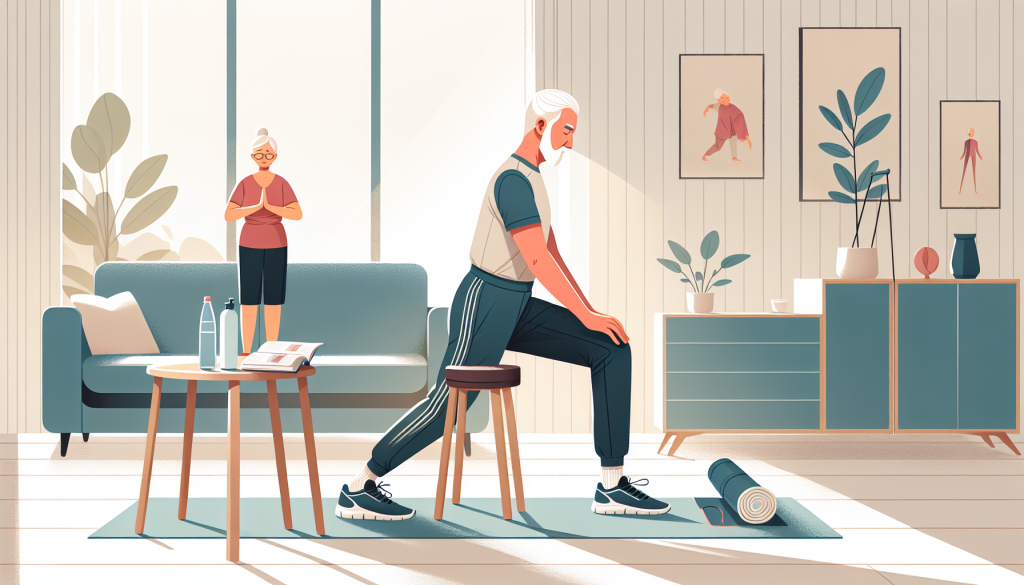
Senior Balance exercises for Beginners: Easy At-Home Routines with Minimal Equipment
Maintaining balance becomes increasingly important as we age. Good balance helps prevent falls, supports independence, and makes everyday activities—like reaching for a glass on a high shelf or climbing stairs—safer and easier. If you’re new to balance training or returning after a break, you don’t need fancy gym gear. With a sturdy chair, a wall, and a few simple moves, you can build steadiness and confidence right at home.
Why balance matters for seniors
– Prevents falls: Balance exercises target the neuromuscular systems that control how you stand, walk, and react to changes in surface or pace.
– Improves confidence: Feeling steadier reduces cautious avoidance of activities you enjoy.
– Supports mobility and gait: Regular balance work helps with posture, alignment, and the ability to walk with confidence.
– Complements daily routines: Balance training pairs well with flexibility and leg-strength exercises to create a well-rounded routine.
Safety first
– Check with your clinician before starting a new Exercise program, especially if you have heart, joint, or vision concerns, or a history of dizziness or migraines.
– Do exercises near a stable surface (a wall or a sturdy chair) in case you need support.
– Wear non-slip, supportive shoes. Avoid slick floors or doing balance work on slippery surfaces.
– Start slow, progress gradually, and stop if you feel sharp pain, dizziness, or shortness of breath.
– Clear the area of clutter and keep a glass of water nearby. If you have a history of falls, consider having a family member or caregiver nearby during sessions.
Minimal equipment you’ll need
– A sturdy chair with a back (for support)
– A clear wall or a counter you can gently touch for balance
– A non-slip area to stand
– Optional: a lightweight towel or small hand weight for light strengthening, a small step or staircase for stepping practice
Structure and timing
– Frequency: aim for 2–4 days per week. Consistency matters more than intensity.
– Duration: start with 15–20 minutes per session and work up to 25–30 minutes.
– Warm-up: always begin with a gentle warm-up (see “Getting Ready” below).
– Progression: move to the next level when you can hold a position comfortably for the target time and maintain good form.
Getting ready: warm-up (3–5 minutes)
– Gentle marching in place: Lift knees to hip height, swinging arms naturally, near a wall for light support.
– Ankle rolls: Lift one foot slightly, rotate the ankle in circles 5–10 times clockwise, then counterclockwise. Repeat on the other foot.
– Shoulder and hip openers: Circle shoulders forward and back; gently rock hips in a small side-to-side motion to loosen up.
– Deep breathing: Inhale through the nose, exhale through the mouth to relax and prepare your nervous system for balance work.
Beginner routine (Weeks 1–2)
Goal: establish familiarity with safe balance tasks and build confidence with supported positions.
1) Sit-to-stand with control
– Setup: Sit toward the edge of a sturdy chair with feet hip-width apart. Use the chair arms if needed.
– Action: Slowly stand up fully without rushing, then lower back to the chair with control. If needed, push off from the arms lightly.
– Reps: 8–12, rest briefly, 2 sets.
– Focus: Keep your weight centered over your feet, head up, and use the leg muscles to rise smoothly.
2) Standing march with wall support
– Setup: Stand beside a wall, one hand lightly touching the wall for support.
– Action: Lift one knee high toward hip level, then lower and switch sides. Keep the other foot planted and your posture upright.
– Time: 30–45 seconds per set; 2–3 sets.
– Focus: Maintain a tall spine, avoid twisting, and avoid locking the standing knee.
3) Side leg raise (supportive hold)
– Setup: Stand beside a chair or countertop, holding for balance.
– Action: Lift the outer leg out to the side with a small range of motion, then slowly return.
– Reps: 8–12 per leg; 2 sets.
– Focus: Move slowly; minimize hip rocking or leaning to the opposite side.
4) Heel-to-toe stand with wall support
– Setup: Stand with one foot in front of the other, heel touching the toe of the back foot, near a wall.
– Action: Hold for 15–30 seconds; switch to the other foot position and repeat.
– Reps: 2–3 holds per side.
– Focus: Keep your gaze forward and your core engaged.
Light progressions you can sprinkle in as you feel steadier
– Slightly increase the hold time for each position to 20–40 seconds.
– Add a small pause or rhythm change: hold for 3 seconds, then 2-second release, repeating.
Progression routine (Weeks 3–6)
Goal: increase stability, reduce reliance on hand support, and introduce more dynamic movement.
1) Single-leg stand with light support
– Setup: Stand near a wall or chair with one finger resting lightly on a support.
– Action: Lift one foot off the floor, balance on the other leg. If needed, touch the support briefly for reassurance, then try to stay without touching.
– Time: 10–20 seconds per leg; 2–3 sets.
– Focus: Keep hips level, avoid leaning forward or backward.
2) Tandem walk with wall support
– Setup: Place one foot directly in front of the other along a straight line, near a wall.
– Action: Take 8–12 steps forward in a straight line, keeping the front heel touching the back toe. Use wall only if necessary.
– Focus: Short, controlled steps; keep eyes forward and abdomen engaged.
3) Mini squats with chair support
– Setup: Stand behind a chair, feet shoulder-width apart, hands on the back of the chair for guidance.
– Action: Perform shallow squats by bending the knees and hips to about 20–30 degrees, then rise back to standing.
– Reps: 8–12; 2–3 sets.
– Focus: Keep knees aligned with toes; don’t let them collapse inward.
4) Toe taps on a line
– Setup: Use tape or a line on the floor as your reference. Stand near a wall or chair if needed.
– Action: Lift the front foot and tap the line forward, then step back to starting position. Alternate feet and maintain a tall posture.
– Reps: 12–16 taps per side; 2 sets.
– Focus: Smooth toe taps, minimal hip movement.
5) Step-ups on a low step
– Setup: Use a low step or stair with a rail for support.
– Action: Step up with one foot, then bring the other foot up to meet it, stand briefly, and step back down in a controlled manner.
– Reps: 6–8 per leg; 2 sets.
– Focus: Keep the move deliberate, avoid rushing; press through the heel.
Advanced options (for those who want a greater challenge and have strong balance)
– Reduce reliance on support gradually; perform with the back of a sturdy chair or a wall only, not threads to a full support.
– Clock reach: Stand near a wall, feet hip-width apart. Reach arms in eight directions (like a clock: 12, 3, 6, 9 o’clock) one at a time, keeping hips still.
– Side-to-side step and reach: Step laterally to the side, then reach across with the opposite hand toward a towel or soft target.
Weekly plan suggestions
– Week 1–2: 2 sessions per week, each 15–20 minutes. Emphasize safety and form. Focus on routines from the Beginner section.
– Week 3–4: 2–3 sessions per week, 20–25 minutes. Introduce the Progression moves (Single-leg stand, tandem walk, mini squats, toe taps).
– Week 5–6: 3–4 sessions per week, 25–30 minutes. Add one or two Advanced moves if you’re comfortable and your clinician agrees.
Monitoring progress and modifications
– Track how long you can hold a position or how many steps you can take without support. Gradual improvement is a good sign.
– If a move causes pain (beyond mild muscle fatigue), stop and reassess form; reduce range of motion or return to a supported version.
– If you have knee, hip, or ankle issues, shorten the range of motion or skip the more challenging leg-lift moves.
– For dizziness or vertigo, avoid rapid head movements and consult your healthcare provider.
Tips for maximizing benefits
– Consistency beats intensity: even 10–15 minutes of balance work on a regular basis yields benefits over time.
– Combine balance with strength: stronger legs and hips support better balance. Pair these routines with light resistance training (like chair squats or wall push-ups) a couple of days a week, if advised by your clinician.
– Focus on form, not speed: deliberate, controlled movements are safer and more effective than fast, jerky motions.
– Breathe naturally: avoid holding your breath; exhale during effort and inhale during relaxation phases.
– Make it enjoyable: listen to music, practice with a partner, or set small, achievable goals to stay motivated.
Common mistakes to avoid
– Reaching too far or twisting the torso to compensate for weakness.
– Letting the knee cave inward during squats or leg raises.
– Trying to do too much too soon; progress gradually as balance improves.
– Skipping the warm-up; cold muscles are more prone to strain.
Who should consider professional guidance
– If you’ve had recent falls, have severe vertigo, uncontrolled high blood pressure, or a recent injury, seek guidance from a physical therapist or qualified fitness professional.
– A professional can tailor exercises to your specific needs, assess your gait, and provide cues to optimize safety and effectiveness.
Putting it all together: a simple 3-week starter plan
– Week 1: 2 sessions, 15–20 minutes each. Focus on Beginner moves: sit-to-stand, standing march, side leg raises, heel-to-toe stands with wall support.
– Week 2: 2–3 sessions, 20–25 minutes. Add single-leg stand with light support and tandem walk; begin mini squats with chair support.
– Week 3: 3 sessions, 25–30 minutes. Introduce toe taps and step-ups on a low step; add clock reach or gentle dynamic movements if ready.
A short note on balance and independence
Building balance is not just about preventing falls; it supports everyday independence. The routines in this article are designed to be practical and doable at home with minimal equipment. By choosing safe progressions, focusing on form, and staying consistent, you can improve stability, mobility, and confidence over time.
In summary
– Start with safety and a simple warm-up.
– Use a chair and wall for support to build confidence.
– Begin with easy, controlled movements that improve stability, posture, and leg strength.
– Progress gradually through beginner, progression, and advanced moves as you gain capability.
– Create a sustainable routine by aiming for a few short sessions per week, tailored to your comfort and doctor’s advice.
If you’d like, tell me your current fitness level, any limitations, and how much space you have at home. I can tailor a personalized starter plan with a week-by-week progression and a printable checklist to track your progress.