
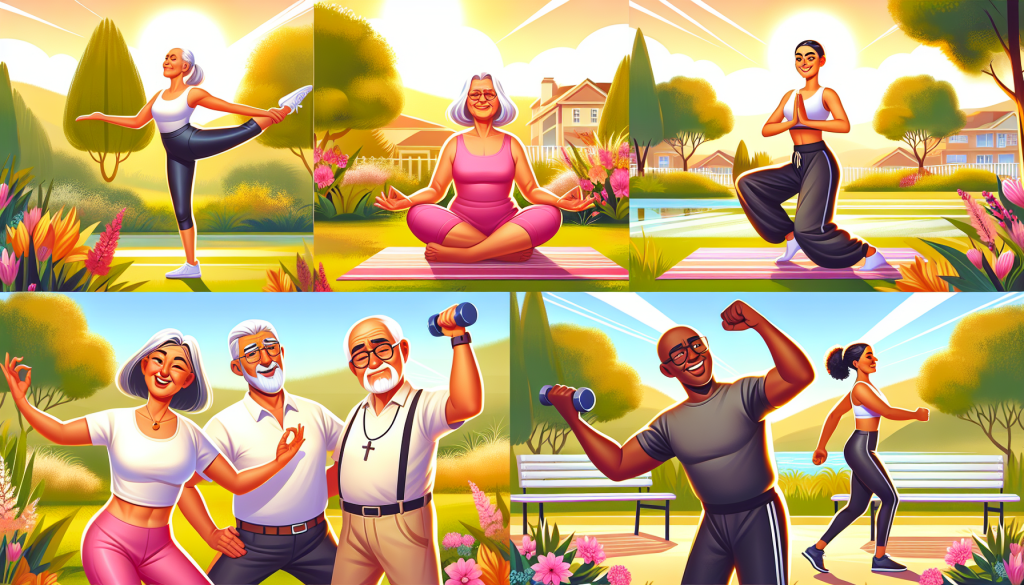
Senior Health exercises: Gentle Routines for Joint Pain and Mobility
As we age, joints can feel stiffer, muscles may weaken, and everyday movements can become more challenging. But gentle, well-planned Exercise is one of the most effective ways to keep joints flexible, strengthen supporting muscles, improve balance, and reduce pain. This article offers practical, low-impact routines designed for seniors dealing with joint pain and limited mobility. The goal is not to push through pain but to move safely, build confidence, and support ongoing independence.
Why gentle movement matters for seniors
– Keeps joints lubricated: Regular movement helps the synovial fluid that nourishes joints circulate, reducing stiffness.
– Preserves muscle strength: Strong muscles take some load off joints and improve stability.
– Maintains range of motion: Gentle stretching and controlled movements slow the loss of flexibility.
– Supports balance and fall prevention: Steady, practiced movements improve proprioception and coordination.
– Boosts mood and energy: Exercise releases endorphins, reduces anxiety, and can improve sleep.
Safety first: preparing to move
– Get medical input: If you have chronic conditions, osteoporosis, uncontrolled blood pressure, heart disease, recent surgery, or severe knee or hip problems, consult your healthcare provider before starting a new routine.
– Start slow and listen to pain signals: Mild discomfort during Exercise can be normal, but sharp or worsening pain is a sign to stop and reassess.
– Use supportive gear and a safe environment: Wear non-slip shoes, work on a non-slip floor, and have a sturdy chair nearby for support. Keep a water bottle within reach.
– Pace and progression: Begin with short sessions (10–15 minutes) a few days a week, then gradually increase duration and/or intensity as tolerated.
Foundations of a gentle routine
1) Warm-up (3–5 minutes)
– Purpose: Prepare joints and muscles for activity, increase blood flow, and reduce injury risk.
– Simple options:
– March in place at a comfortable pace.
– Shoulder rolls (up and back), neck tilts (gentle side-to-side), ankle circles.
– Slow march while moving arms gently to loosen the shoulders and upper back.
2) Gentle range of motion (ROM) for all major joints
– Neck: slow chin-tucks and gentle head turns.
– Shoulders: arm circles small to medium, forward and backward.
– Elbows and wrists: gentle flexion/extension and wrist circles.
– Spine: seated or standing side bends, gentle twist with a chair for support.
– Hips and knees: seated leg extensions, heel slides in standing or supine position, ankle pumps.
– Ankles: ankle circles, toe points and flexes.
– Tip: Move each joint within a comfortable range, purposefully and slowly—never force a movement.
3) Low-impact cardiovascular work (10–20 minutes)
– Goals: Elevate heart rate modestly, improve circulation, and support overall health without stressing joints.
– Options:
– Walking at a comfortable pace, either indoors with handrails or outdoors on even ground.
– Seated cardio: marching in place while seated, seated side steps, or seated stepping with a small range of motion.
– Water-based movement if available: gentle water walking or water aerobics reduce joint load.
4) Strength training with light resistance (2–3 days per week)
– Why it matters: Strength helps support joints, improve stability, and maintain independence.
– Types of resistance:
– Resistance bands: light to moderate level (thera-band or loop bands).
– Free weights: light dumbbells (1–5 pounds) or household items like bottles or cans.
– Bodyweight: chair squats, wall push-ups, standing heel raises.
– Sample exercises:
– Seated bicep curls with light dumbbells or resistance bands.
– Seated leg extensions or standing leg curls with light ankle weights or no weight.
– Wall push-ups or countertop incline push-ups for chest and arm strength.
– Calf raises while holding onto a chair for balance.
– Seated or standing ball squeezes (inner thigh) for gentle adductor work.
– Repetition ranges: 8–12 repetitions per Exercise, 1–2 sets to start. Increase gradually as you feel capable.
5) Flexibility and mobility work (daily or on most days)
– Focus on slow, controlled stretches held for 15–30 seconds (start with shorter holds if needed).
– Examples:
– Seated hamstring stretch by extending one leg with heel on the floor and reaching toward the toes.
– Chest opener: clasp hands behind the back, lift the arms gently.
– Calf stretch at a wall: one foot forward, one foot back, gently lean into the wall.
– Low back and hip stretches like a seated spinal twist or figure-four seated stretch.
– Important: Do not force a stretch if it causes sharp pain; ease into tension and release.
6) Balance and stability (2–3 days per week)
– Balancing is essential to reduce fall risk, especially for seniors.
– Simple balance activities:
– Supported stands: hold the back of a sturdy chair, lift one foot slightly off the floor, hold for 10–30 seconds, switch sides.
– Heel-to-toe walk along a hallway or line on the floor, using a wall for support if needed.
– Standing on one leg near a chair, gradually increasing time as confidence grows.
– Gentle Tai Chi-inspired moves or slow, controlled weight shifting.
7) Cool-down (3–5 minutes)
– Gradually lower heart rate and relax the muscles.
– Slow down movements, deep diaphragmatic breaths, and light stretching for major muscle groups.
Two gentle routine options you can try
Option A: 15–20 minutes, ideal for beginners or those with more joint pain
– Warm-up: 3 minutes of marching in place with light arm swings.
– ROM sequence: Neck tilts, shoulder circles, elbow and wrist circles, ankle circles (repeat once for each joint).
– Seated or standing cardio: 5–7 minutes of seated leg extensions and light marching in place with a chair for support.
– Strength: 1 set of 8–12 reps each
– Seated bicep curls with light dumbbells or bands
– Seated leg extensions or standing mini-squats near a chair
– Wall push-ups or countertop push-ups
– Balance: 2 sets
– Supported single-leg stands (holding the back of a chair)
– Heel-to-toe weight shifts with support
– Flexibility: 5 minutes of gentle stretches (calf, hamstring, chest, hip stretch)
– Cool-down: 2 minutes of deep breathing and light stretching
Option B: 25–30 minutes, for those who can handle a bit more
– Warm-up: 5 minutes
– Brisk walk or step-tap in place, moving arms and torso gently
– ROM: 5 minutes of full-joint mobility sequence (neck, shoulders, spine twists, hip circles, ankle circles)
– Cardio and light strength: 12–15 minutes
– Seated or standing marches with light arm movements
– 1–2 sets of 8–12 reps for each resistance Exercise (bicep curls, chair squats, wall push-ups, ball squeezes)
– Balance and stability: 5 minutes
– Supported single-leg stance, progress to removing some support as tolerated
– Side leg raises holding onto a chair
– Flexibility: 3–5 minutes of stretches focusing on hips, hamstrings, and shoulders
– Cool-down: 2–3 minutes of breathing and relaxation
Modifications for common joint issues
– Knee pain: Use a chair and avoid deep squats. Perform mini-squats or sit-to-stand movements with a reduced range of motion. Emphasize slow, controlled movements and keep the knee aligned with the toes.
– Hip pain: Favor hip-friendly movements like seated leg extensions, gentle hip circles, and supported range-of-motion exercises. Avoid twisting the knee or forcing deep rotations.
– Shoulder pain: Use smaller ranges of motion, keep movements smooth, and avoid overhead lifting if it provokes pain. Use a strap or towel to assist with stretches when needed.
– Wrist or finger pain: Use thicker handles on resistance bands, or perform exercises with a fist or open-pistle grip to reduce strain. If gripping is painful, perform movements without weights and focus on range of motion.
– Osteoarthritis considerations: Prioritize low-impact, joint-friendly motions; avoid high-impact activities. Use warm-ups to prepare joints and cut back on repetitions if pain increases.
Building a sustainable routine
– Choose activities you enjoy: Consistency beats intensity. If you dislike one Exercise, substitute another that works the same muscle group.
– Set realistic goals: Short-term objectives (e.g., three 15-minute sessions this week) can build momentum toward longer-term fitness habits.
– Track progress: Use a simple log to note duration, exercises performed, and how you felt afterward. Celebrate small improvements, like increased range of motion or longer balance holds.
– Integrate movement into daily life: Short walks after meals, light stretching during TV commercials, or a brief chair-based routine before bed can help make Exercise a habit.
– Social support: Exercise with a friend, family member, or join a community class designed for seniors. Social engagement enhances motivation and safety.
Practical tips to maximize safety and effectiveness
– Hydration and environment: Drink water before and after sessions; ensure a comfortable room temperature and good lighting.
– Breath control: Breathe naturally. Exhale through effort (lifting, pushing) and inhale during easier phases (lowering, resting).
– Pain vs. discomfort: Distinguish between mild, pleasant stretch tension and pain. If pain persists beyond a short time after Exercise, reassess your routine and seek guidance.
– Proper form and alignment: Focus on alignment rather than speed. If you’re unsure about form, consider working one-on-one with a trainer who has experience with seniors or seek instructional videos from reputable sources.
– Progression: Slowly increase duration or resistance by small increments (5–10%).
When to seek professional help
– If joints become significantly more painful, swollen, or red.
– If you experience dizziness, chest pain, or shortness of breath during Exercise.
– If you have a known condition such as osteoporosis with a high fracture risk, a clinician may suggest a supervised program.
– If you’re uncertain about appropriate exercises due to previous injuries or surgeries, consult a physical therapist or certified trainer who can tailor a plan to your needs.
The broader benefits beyond joint health
– Mental well-being: Regular gentle movement can reduce anxiety and improve mood, an important aspect of overall health for seniors.
– Independence: Maintaining strength and mobility supports the ability to carry out daily tasks, manage personal care, and engage in activities you enjoy.
– Social connection: Group classes or partners for workouts provide motivation and reduce isolation.
An inclusive mindset for seniors
There is no one-size-fits-all approach to senior fitness. Some days will feel better than others, and that’s normal. The aim is to stay active in a way that respects your body’s signals while encouraging gradual improvement over time. Gentle routines that combine mobility, light resistance, balance, and flexibility can help maintain joint function, improve posture, and support a more comfortable, active daily life.
Final thoughts
Gentle health exercises for seniors are about steady progress, not perfection. Start with manageable movements, honor any pain signals, and build a routine you can maintain over weeks and months. By combining warm-ups, ROM, low-impact cardio, strength training with light resistance, flexibility, and balance work, you can create a holistic program that supports joint health, mobility, and overall well-being. With consistency, guidance when needed, and a focus on safety, you can empower yourself to move with greater ease, reduce discomfort, and preserve independence in the years ahead. If you’re unsure where to begin, consider talking to your healthcare provider or a qualified fitness professional who specializes in senior wellness. They can tailor a plan to your abilities, preferences, and medical history, helping you stay active in a way that feels comfortable and sustainable.
In conclusion, gentle Exercise is a powerful ally for seniors facing joint pain and limited mobility. The routines described here emphasize small, manageable steps that collectively contribute to better joint function, stronger muscles, and improved balance. Start where you are, progress gradually, and remember that every movement—no matter how modest—counts toward a healthier, more independent life.